


The Brian D. Joseph Chair in Classics (Endowed Visiting Professorship)
College Year in Athens Appoints Inaugural Brian D. Joseph Endowed Chair in Classics
College Year in Athens (CYA) is pleased to announce the appointment of Geoff Bakewell as the inaugural Brian D. Joseph Endowed Chair in Classics, for a three-year term beginning on September 1, 2026.
Named in honor of Brian D. Joseph, Distinguished University Professor Emeritus of Linguistics and The Kenneth E. Naylor Professor Emeritus of South Slavic Linguistics at The Ohio State University (OSU) and a CYA alumnus (Class of 1972), and established through the generous support of a benefactor, the Brian D. Joseph Endowed Chair in Classics supports teaching, research, and curricular development in Classics and related fields.
As Chairholder, Professor Bakewell will teach one course per semester and work closely with CYA faculty on curricular and pedagogical matters, combining teaching and research with active participation in CYA’s academic life.
Geoff Bakewell is Professor of Ancient Mediterranean Studies at Rhodes College in Memphis. His scholarship focuses on deeply contextualized readings of Athenian literature and philosophy; it includes a monograph on Aeschylus, a co-edited volume, translations of several plays, and over 25 articles and book chapters. He holds a Ph.D. from Brown University and a B.A. from Yale University and has received several awards, including a Fulbright and a teaching award from the Classical Association of the Middle West and South. He loves Athens, where he has served as Whitehead Professor at the American School of Classical Studies (ASCSA). Professor Bakewell is delighted to join CYA, where he will offer courses exploring Plato’s dialogues in situ.
The Brian D. Joseph Endowed Chair in Classics contributes to CYA’s role as a site of scholarly exchange and academic activity in Athens.
The Brian D. Joseph Chair in Classics is an endowed visiting professorship that enriches the study of antiquity at CYA, welcoming outstanding scholars for an appointment of up to three (3) years, beginning on September 1, 2026. The Chairholder will:
- Teach one course per semester in their area of expertise.
- Pursue a clearly defined research agenda, making use of Greece’s rich archaeological and cultural resources, with the expectation of producing substantial research output.
- Deliver at least one public research lecture at CYA during their term.
- Contribute to faculty meetings and institutional discussions.
- Build relationships with the wider academic community in Greece.
- Submit a brief report to CYA at the conclusion of the appointment, outlining research activities and outcomes.
- Acknowledge the support of the Brian D. Joseph Chair in Classics at CYA in all publications or presentations resulting from work undertaken during the appointment.
The successful candidate will be an accomplished scholar, holding a permanent university position in Classics or related fields, with a strong publication record and an active engagement in research, teaching, and service. Substantial experience in undergraduate education is required; a strong interest in experiential, site-based learning will be considered an asset.
- Appointment Duration: Up to three (3) years
- Location: Athens, Greece
- Compensation & Benefits: The position includes a salary commensurate with experience, a research grant, housing in a CYA faculty apartment, weekday lunches at the CYA dining hall, health insurance, contributions to a retirement plan, certain travel expenses, and a grant for conference attendance once per year.
- Institutional Resources: CYA will facilitate access to local archives, libraries, institutions, and museums.
- Teaching Load: One course per semester
Interested candidates should submit:
- A cover letter outlining their interest in the position and how their teaching and research align with CYA’s academic mission.
- A current CV.
- A research proposal that includes
- a summary of the project to be undertaken during the appointment, presenting the research question, its significance, and anticipated wider impact; and
- a proposed public lecture, including a provisional title and an abstract.
- A teaching statement that includes
- a summary of the applicant’s approach to undergraduate teaching and mentoring; and
- a brief description of one proposed course to teach at CYA.
- Names and contact information of three (3) referees. Referees will only be contacted if the candidate is shortlisted.
Deadline for Applications: October 17, 2025
Start Date of the Appointment: September 1, 2026
Please address questions to [email protected]
 Since 1962, College Year in Athens (CYA) has been a trailblazer in study abroad education, becoming the first program in Greece for English-speaking undergraduates from U.S. colleges and universities. At its core, CYA has always been dedicated to Classical Studies, shaping generations of scholars through rigorous coursework, interdisciplinary inquiry, and immersive learning in the heart of the ancient world.
The foundations of CYA’s Classics curriculum were laid by scholars such as H.D.F. Kitto, A.R. Burn, Peter Green, Judith Binder, Henry Robinson, Harry L. Levy, and Henry Immerwahr. The school’s first Academic Director, Raphael Demos, set the intellectual tone, establishing CYA as a center of academic excellence in Greece.
CYA’s Academic Network
CYA’s reputation in U.S. higher education is reflected in its alumni network of over 11,500 graduates, including nearly 300 academics in Classical and Hellenic Studies at leading institutions.
We are proud to welcome students from top-tier research universities and the best Liberal Arts colleges in the United States, including: Amherst College, Bowdoin College, Brown University, Bryn Mawr College, Columbia University, College of the Holy Cross, Cornell University, Dartmouth College, Dickinson College, Franklin & Marshall College, Gettysburg College, Grinnell College, Hamilton College, Harvard University, Haverford College, Kenyon College, Macalester College, Middlebury College, Oberlin College, The Ohio State University, Pennsylvania State University, Pomona College, Princeton University, Reed College, Skidmore College, Swarthmore College, Trinity College, University of Michigan – Ann Arbor, University of North Carolina at Chapel Hill, University of Notre Dame, University of Pennsylvania, University of Southern California, Washington University in St. Louis, Wellesley College, Wesleyan University, Williams College, Yale University, among others.
As a further testament to our standing in Classical Studies, we are now an institutional member of the American School of Classical Studies at Athens (ASCSA), reinforcing our ties with one of the world’s foremost centers for Classical research and scholarship.
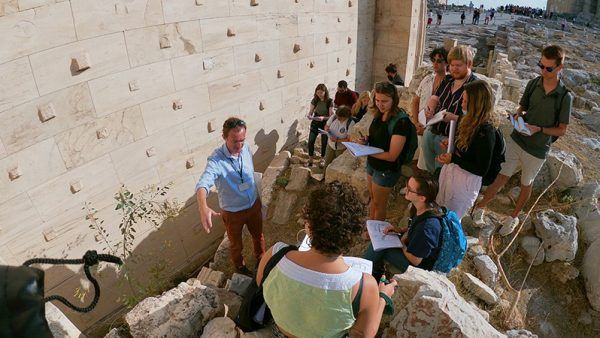 From its inception, CYA’s curriculum has emphasized the history, literature, philosophy, art, and architecture of ancient Greece, fostering a strong Liberal Studies tradition. At CYA, we believe that the teaching of the ancient world should come alive through innovative and engaging courses, on-site classes, and a wide variety of interdisciplinary and skills-based learning. At the heart of our teaching is a desire to show students what can be gained by taking a holistic approach to the ancient world, learning something of each of the disciplines that make up the field, and particularly focusing on what being in Greece—at the very heart of its ancient legacy—can do for one’s understanding of antiquity.
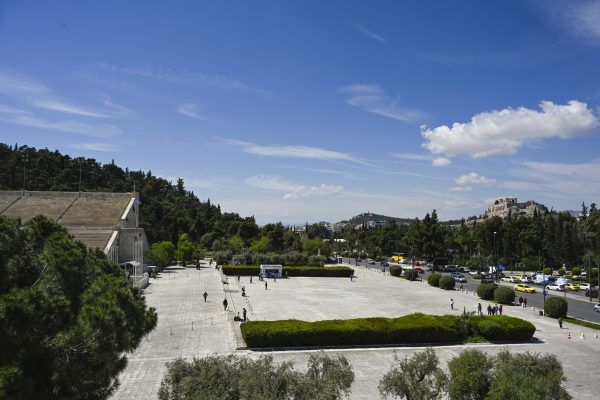
CYA’s location in the center of Athens, next to the historic Panathenaic Stadium (Kallimarmaro), places students at the crossroads of ancient and modern Greece, allowing them to engage with Classical education in direct relation to the physical remains of antiquity.
In this context, we have designed a number of courses, some for students taking Classics for the first time and others—specialist and focused—aiming to build upon our students’ prior experience, realizing that many of them have already taken foundational Classics, archaeology, and ancient history courses at their home institutions.
At CYA, Classics is more than the study of antiquity—it is a comprehensive exploration of the ancient world, integrating language, literature, history, art and archaeology, culture, and society. Our approach bridges theoretical knowledge with hands-on experiences, enabling students to engage with ancient texts, inscriptions, and archaeological sites in their original context.
- In the field of archaeology, we are passionate about on-site teaching, exposing students to the tangible remains of the ancient world and working with them to interpret archaeological evidence and to draw from it historical, cultural, and political conclusions. Our courses provide access to the major monuments and museums of the city through ‘behind the ropes’ learning with specialists in the field. Beyond Athens, all students take part in field study across Greece, exploring sites in Crete, the Peloponnese, and Northern Greece.
- Ancient history remains a strong vein running through our program, with courses that explore key aspects of the ancient world through a diverse range of sources and perspectives. Students develop the critical tools to study and comment upon ancient texts and modern scholarship, engaging with major and minor historical writers, papyrological and epigraphic sources, and a variety of historiographical frameworks. By examining the construction and reinterpretation of history over time, they gain a deeper understanding of how the past is studied, debated, and applied in the present.
- Our curriculum includes philology courses, which explore language as both a literary and practical tool. CYA offers Greek and Latin at all levels, demonstrating our deep commitment to ancient language instruction by running these courses even for a single student. At the same time, we go beyond classical literature, and offer courses on Epigraphy and Paleography, examining dialectal features, linguistic development, and the historical value of the texts. As a result, our students gain a deeper understanding of the oral and written culture of the peoples of the past. In other words, at CYA, language is not studied in isolation but as a key to unlocking ancient society, thought, and communication.
Postbaccalaureate in Classics
CYA offers a comprehensive Postbaccalaureate Program in Classics that is designed to enhance the classical language proficiency and scholarly aptitude of college graduates aiming for advanced studies in Classics. This intensive one-year program provides a full-time academic experience, featuring a diverse array of courses, such as:
- Classical Languages: Instruction at all levels, tailored to individual proficiency, encompassing both Ancient Greek and Latin.
- Epigraphy: Detailed analysis of ancient inscriptions, offering insights into historical linguistics and societal structures.
- Paleography: Study of the writing systems of Late Antiquity and Medieval period, cultivating skills in deciphering historical texts.
- Archaeological Drawing: Techniques in accurately documenting artifacts and excavation sites, essential for field archaeology.
- Excavation Fieldwork: Practical experience in archaeological digs, providing hands-on understanding of excavation methodologies.
Beyond the structured curriculum, the program emphasizes immersive learning through direct engagement with Greece’s cultural heritage. Students participate in field studies, on-site classes, and museum visits, integrating theoretical knowledge with practical application. This holistic approach ensures a well-rounded academic experience, preparing participants for successful admission to graduate programs.
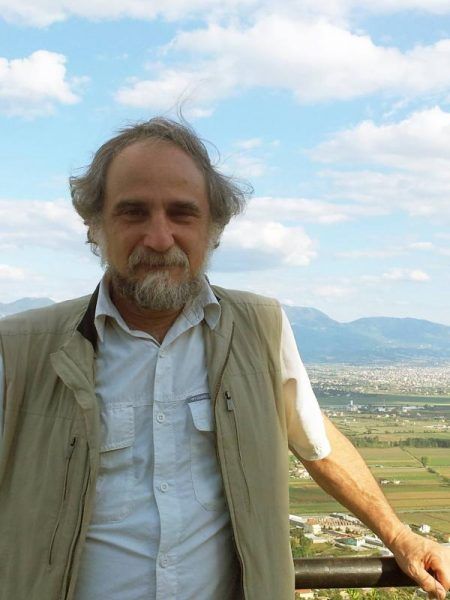 Brian D. Joseph is a distinguished American linguist specializing in historical linguistics, with a focus on Greek, Albanian, and Balkan languages. He currently holds the titles of Distinguished University Professor Emeritus of Linguistics and The Kenneth E. Naylor Professor Emeritus of South Slavic Linguistics at The Ohio State University (OSU).
An alumnus of College Year in Athens (CYA), Class of 1972, Professor Joseph earned his B.A. in Linguistics from Yale University in 1973, followed by an M.A. in 1976 and a Ph.D. in 1978 from Harvard University. After completing a Killam Postdoctoral Fellowship at the University of Alberta, he joined the faculty at OSU in 1979, where he has since made significant contributions to historical linguistics, language contact, and morphological theory.
His research spans language change, Greek linguistics (from Mycenaean to Modern Greek), Albanian linguistics, and Balkan linguistics, with additional work on morphological theory and language sustainability. Prof. Joseph has been an active member of major linguistic societies, serving as Vice-President of the Linguistic Society of America in 2018 and its President in 2019. He was elected a Fellow of the American Academy of Arts and Sciences (2004), of the American Association for the Advancement of Science (2006), and of the Linguistic Society of America (2010), and a Member of the American Philosophical Society (2019). Additionally, he is a Foreign Member of Academia Europaea (MAE) since 2021 and holds honorary doctorates from La Trobe University (2006), the University of Patras (2008), and the Aristotle University of Thessaloniki (2022). He retired from teaching in June 2024 but remains active in his research and publication program.
The newly established Brian D. Joseph Chair in Classics, made possible through the generosity of a CYA benefactor, reflects Prof. Joseph’s enduring connection to CYA.