Conservation Issues Confronting the Mediterranean Sea and Sustainable Solutions: An Interdisciplinary, Project-Based Approach (Athens, Samos)
The Mediterranean Sea is one of the world’s richest biodiversity hotspots, yet it is under intense threat from overfishing, habitat destruction, pollution, climate change, and invasive species. These anthropogenic pressures have led to both biodiversity loss and the deterioration of fragile ecosystems. Conservation efforts and sustainable management are urgently needed to safeguard the Mediterranean’s unique marine life.
In this course, students will engage directly with the biodiversity of Greece’s Mediterranean ecosystems through classroom learning, laboratory study, and extensive fieldwork. Using a multidisciplinary lens, students will explore the science of conservation, the realities of environmental degradation, and the global frameworks driving sustainable development. Special emphasis will be placed on plastic pollution, its ecological consequences, and international efforts such as the United Nations Global Plastics Treaty.
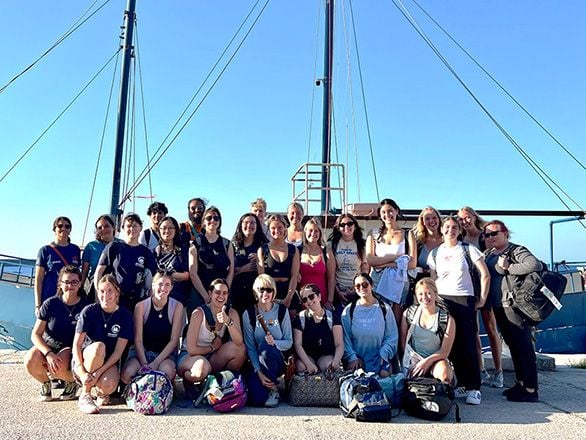
Students will work alongside scientists and conservationists from the Archipelagos Institute for Marine Conservation on the island of Samos and engage with UN experts on marine conservation and sustainability policy. Living and working at sea, participants will troll for plastic pollution, analyze samples, and witness firsthand the challenges facing endangered species, such as the loggerhead and green sea turtle, the common bottlenose dolphin, and the sperm whale. Throughout the course, students will participate in a team-based Project-Based Learning (PBL) project that integrates science, policy, and advocacy under the guidance of faculty mentors.
Highlights of this Course:
1) Learn the foundations of conservation science and sustainability through interactions with leading researchers, conservationists, industrial engineers, and organizations such as the United Nations (UN Sustainable Development Goals & Global Plastics Treaty).
2) Conduct authentic research at sea, collecting and analyzing data on microplastics and their ecological effects on the Aegean Sea.
3) Study endangered Mediterranean species (sea turtles, dolphins, whales) in their natural habitats while collaborating with marine scientists on conservation projects.
4) Develop transferable career skills—research methods, critical thinking, teamwork, intercultural awareness, adaptability, and science communication—while building relationships with faculty, scientists, conservationists, community stakeholders in industry, and policy experts.
5) Engage in applied conservation work, from plastic cleanup efforts to ecosystem monitoring, linking local practice with global policy frameworks.
6) Participate in a transdisciplinary group project through problem-based learning to propose innovative solutions to biodiversity loss and environmental injustice.
7) Immerse yourself in Greek culture, geography, and history, with opportunities for exploration during free time.
8) Explore the intersection of conservation, sustainability, and social justice, and learn how to incorporate these themes into your academic and professional path.
Course Details
Enrollment
This course requires a minimum enrollment of 10, with a maximum enrollment of 20.
Credit
60 contact hours
Essential Information
The course starts and ends in Athens. Transportation between Athens and Samos as well as during day excursions is included in the course fee.
Enrolled students will have access to detailed information prior to departure that will include directions to the Academic Center and other practical information about the course. CYA recommends the following website for general information about Athens and Greece: http://www.athensguide.com/.
IMPORTANT NOTE: This course involves extensive travel. Be wary of overpacking. Pack only what you can carry comfortably, because you will be required to check- in and out of accommodations for each stay / travel segment of this course. In addition, while on Samos island, you will spend your days on a research boat with limited storage space. It will also be useful to bring with you travel-size cosmetics. Here is a comprehensive packing list.
Enrolled students will have access to detailed information prior to departure that will include directions to the Academic Center and other practical information about residing in Athens. CYA recommends the following websites for general information about Athens and Greece: http://www.athensguide.com/.
Housing
Students are housed within walking distance of the CYA Academic Center in either CYA student apartments located in the Pangrati neighborhood of central Athens or in hotel accommodations arranged by CYA. CYA apartments are simply furnished and equipped with a full kitchen and air-conditioned bedrooms; towels, linens and housekeeping service will be provided. Hotel accommodations will be in simple 2- or 3-star hotels, double- or triple-occupancy, with air-conditioned rooms. While on Samos, students will be housed on board an Archipelagos research/conservation vessel in quad cabins.
Facilities
The CYA Academic Center is located next to the Athens Marble Stadium and houses classrooms, the library, the student lounge and cafeteria, computer facilities (including wireless access for those students who choose to bring laptop computers), laundry facilities, and administrative offices. The Academic Center is accessible Monday-Thursday 9:00 a.m.-8:00 p.m., Friday 9:00 a.m.-6:00 p.m.
Meals
When class is in Athens a full mid-day meal will be served weekdays in the CYA cafeteria between the hours of 12:00-3:00 p.m. While traveling, breakfast will be offered at the Hotel. A welcome dinner and a farewell lunch are also included in the course fee.
Day-to-Day Program & Itinerary
The day-to-day program and itinerary of the course are subject to change. Students are advised not to make plans for their free time or weekends in advance, as class schedules and site visits may be re-scheduled depending on local conditions.


FACULTY
-

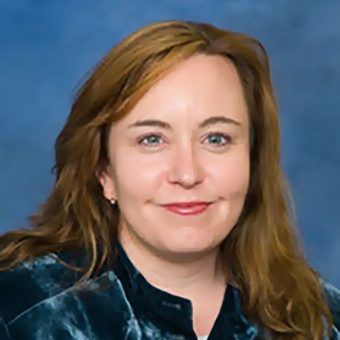
Dr. Jacqueline McLaughlin
PhD (University of Medicine and Dentistry of New Jersey, USA), Visiting Professor
-