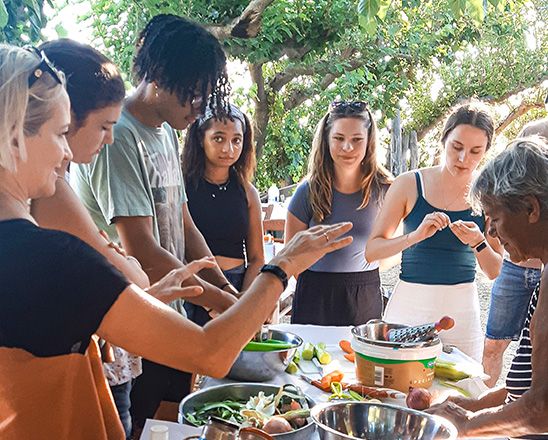
Food and Authenticity
Are you hoping to enjoy some authentic Greek food while you’re studying in Greece? Eat some “real” feta? Experience some tomatoes that actually “taste like tomatoes”? Get some true Greek yogurt with honey made by Greek bees? If you’re like most students to Greece–and millions of tourists as well–the answers are probably yes.
In fact, food is a central entry point to experiencing other cultures for many people, travelers and otherwise. What they mean by “authentic” may be hard for them to define, but they’re confident that they’ll know it when they see it. Or taste it. In this course, we’ll be using this taken-for-granted “authenticity” as the starting point of our explorations: what are the many ways that the search for authenticity has shaped our food cultures? And what is the history behind society’s concern for the authentic?
This interest in the authentic expands far beyond our desire to consume cultural authenticity when we travel, or to eat “good”, “real”, or “ethical” food when we’re at home. It’s an ideal that we have for ourselves–living authentic lives–and for the world around us that we would seek to value. We’ll be using our experiences as students, travelers, and eaters to explore how the concept of authenticity structures our understanding of the world around us, and gives meaning to what we eat. Our course will draw on examples from around the world, but will have a specific focus on foods in Greece. We will satisfy our desire to explore new foods and understand their history, while at the same time questioning and critiquing why we share that desire in the first place.