Sparta Uncovered: War, Gender, and Politics in Ancient Greece (Athens, Sparta, Kalamata, Olympia, Delphi)

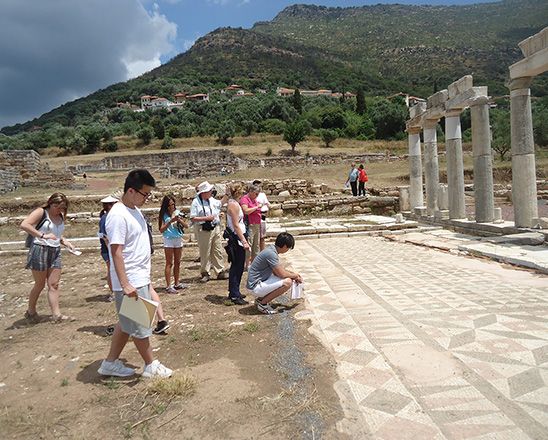
Ancient Sparta has long fascinated modern scholars, students, filmmakers, and writers – as a polis that, ostensibly, was obsessed with warfare, boasted of a rigorous educational program that taught young boys how to steal and to murder slaves known as “helots,” allowed women to acquire an unprecedented degree of power and licenses, and was far more socially, politically, economically, and culturally backward than its main political rival, Athens. What are the sources for such long-held beliefs about ancient Lacedaemon (= the other Greek name for Sparta), and to what degree can we trust them? How can the modern student pierce the mirage of negative and positive beliefs that already began to envelop Sparta in the fifth century BCE to get at a “true” picture of this polis that played such a key role in the Greeks’ ultimate defeat of the Persians in 479 BCE and that briefly enjoyed hegemony following its defeat of Athens in the Peloponnesian War in 405 BCE? We will consider these and many other questions during this intensive four-week study of Greece, with a focus on those cities and archaeological sites that that are key for the study of Spartan society and its history as well as those museums that provide material evidence that we will investigate together with the major literary accounts of ancient Sparta.
Enrollment
This course requires a minimum enrollment of 10, with a maximum enrollment of 15.
Credit
60 contact hours
Essential Information
The course starts and ends in Athens. Transportation between Athens and the rest of the course’s destinations, as well as during day excursions is included in the course fee.
Enrolled students will have access to detailed information prior to departure that will include directions to the Academic Center and other practical information about residing in Athens. CYA recommends the following website for general information about Athens and Greece: http://www.athensguide.com.
IMPORTANT NOTE: This course involves extensive travel. Be wary of overpacking. Pack only what you can carry comfortably, because you will be required to check- in and out of accommodations for each stay/travel segment of this course. It will also be useful to bring with you travel-size cosmetics.
Housing
Students are housed within walking distance of the CYA Academic Center in either CYA student apartments located in the Pangrati neighborhood of central Athens or in hotel accommodations arranged by CYA. CYA apartments are simply furnished and equipped with a full kitchen and air-conditioned bedrooms; towels, linens and housekeeping service will be provided. Hotel accommodations will be in simple 2- or 3-star hotels, double- or triple-occupancy, with air-conditioned rooms.
Facilities
The CYA Academic Center is located next to the Athens Marble Stadium and houses classrooms, the library, the student lounge and cafeteria, computer facilities (including wireless access for those students who choose to bring laptop computers), laundry facilities, and administrative offices. The Academic Center is accessible Monday-Thursday 9:00 a.m.-8:00 p.m., Friday 9:00 a.m.-6:00 p.m.
Meals
When class is in Athens a full mid-day meal will be served weekdays in the CYA cafeteria between the hours of 12:00-3:00 p.m. While traveling, breakfast will be offered at the Hotel. A welcome dinner and a farewell lunch are also included in the course fee.
Day-to-Day Program & Itinerary
The day-to-day program and itinerary of the course are subject to change. Students are advised not to make plans for their free time or weekends in advance, as class schedules and site visits may be re-scheduled depending on local conditions.