Under the Greek Sky: A Journey Through Space, Time and Imagination
Course Description
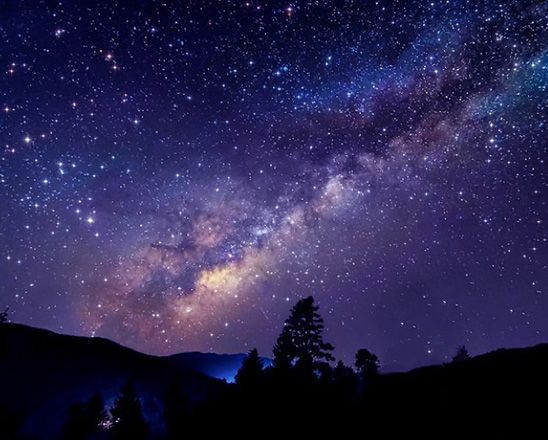
For millennia, humanity has gazed at the stars in wonder, weaving myths, making discoveries, and daring to explore the unknown. This course invites students on an exhilarating journey through space and time—one that connects the cosmic ambitions of ancient civilizations with today’s groundbreaking space missions. Like Odysseus navigating uncharted waters, we will embark on a quest to uncover the mysteries of the universe through the lens of mythology, science, philosophy, and imagination.
Students will explore the celestial connections between Greek myths and modern space exploration, tracing how the stories of gods and heroes mirror our quest to understand the cosmos. From the Antikythera Mechanism to exoplanet discoveries, from ancient temples aligned with the stars to the latest space missions, this course unravels how Greece’s rich heritage intertwines with our exploration of the universe.
The course offers an accessible, engaging, and thought-provoking approach to space science. Through interactive discussions, hands-on activities, virtual reality experiences, and storytelling, students will develop critical thinking and science communication skills. Topics include the search for extraterrestrial life, the ethics of space colonization, and astronomy in popular culture. The course also provides opportunities to visit observatories, participate in stargazing sessions, and engage with experts from leading research institutions, such as the European Space Agency (ESA) and the National Centre for Scientific Research “Demokritos”.
By the end of the semester, students will have embarked on their own intellectual odyssey, gaining not only knowledge of the cosmos but also the ability to communicate its wonders, connecting past and present, myth and reality, Earth and the stars.
Course Approach
This course takes an interactive and interdisciplinary approach, making space exploration and its cultural impact accessible to all students. Each session combines storytelling, scientific discovery, and hands-on activities to create an engaging learning experience.
Through lively discussions and debates, students will examine space colonization, celestial myths, and the role of astronomy in philosophy. Visits to key locations—including the National Observatory of Athens and the planetarium—will bring theoretical concepts to life, while multimedia resources such as space mission data, and science fiction films will enrich the course content.
A strong emphasis is placed on creative and project-based learning. Students will develop their own science communication projects, whether through storytelling, visual media, or interactive presentations, helping them translate complex ideas into engaging narratives for diverse audiences. Guest lectures from ESA and leading research institutions will provide insight into real-world space exploration, ensuring that students leave the course with both knowledge and inspiration.
Learning Objectives
By the end of the course, the students should be able to:
- Understand the scientific method and the different types of scientific research, in other words understand how researchers think and act in different fields such as nanotechnology, nuclear physics, telecommunications and biology. Syllabus Page 2 of 11
- Recognize the important role of scientific literacy in society.
- Communicate effectively important scientific results obtained at NCSR “Demokritos” to different audiences. This means that they will be able to adapt their method according to the audience (age, societal background, knowledge, scientific or not).
- Use different ways of communicating effectively science: storytelling, presentations, social media, writing, visual media.
- Learn about pedagogical approaches in teaching science and create activities for the classroom based on research relevant to the NCSR “Demokritos”.
- Evaluate the impact of their science communication efforts and reflect on the feedback in order to improve their skills and projects.