


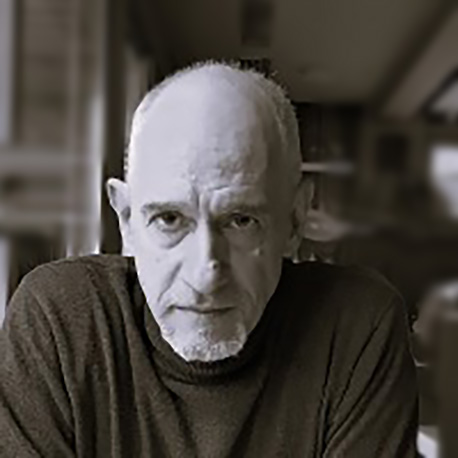
Dr. Anastasios Lagoyannis
-
PhD (University of Ioannina, Greece)
-
Physics (PHYS)
Courses
Dr. Anastasios Lagoyannis, PhD, is a Director of Research at the Institute of Nuclear and Particle Physics (INPP), NCSR “Demokritos,” and he currently serves as Head of the Tandem Accelerator Laboratory as well as Deputy Head of INPP. His work combines accelerator-based experimental research with advanced ion-beam methods, with strong emphasis on quantitative ion-beam analysis (IBA) and the production/validation of reliable reference data that enable high-accuracy elemental and materials characterization.
He has a particularly strong teaching and training profile, with sustained delivery of university-level instruction and specialized professional courses. Since 2015 to present, he has taught “Archaeometry II” in the postgraduate program “Cultural Heritage Materials and Technologies” (University of the Peloponnese), demonstrating long-term educational impact in the cultural heritage domain. His teaching record also includes earlier formal laboratory instruction in core physics subjects (e.g., electromagnetism, optics/waves) and applied skills modules, alongside recurring invited lectures in schools and postgraduate training on ion accelerators, ion-beam studies of materials, and accelerator safety/radiation protection. He has also supervised and co-supervised a broad range of diploma and postgraduate student projects and participated in PhD committees, reflecting extensive hands-on mentoring and capacity-building in experimental techniques and data analysis.
In cultural heritage research, he brings deep expertise in applying ion-beam techniques to archaeometry and heritage materials studies, leveraging non-destructive or minimally invasive analytical approaches and the quantitative rigor required for complex, heterogeneous objects. This includes the disciplined use of IBA methods (such as RBS/EBS, NRA, and PIGE) and validated nuclear data to support robust compositional and stratigraphic interpretation for cultural heritage questions. His heritage-facing profile is reinforced not only through his long-running postgraduate teaching, but also through dedicated training such as participation in an IAEA regional course on archaeometric dating techniques.
Alongside his research and teaching, he contributes actively to scientific operations, user-facing facility delivery, and community service. His leadership roles within INPP and the Tandem Laboratory are complemented by sustained participation in national and international projects and collaborations, and by peer-review activity for journals that include archaeometry-relevant venues, reflecting recognition across both fundamental and applied domains.