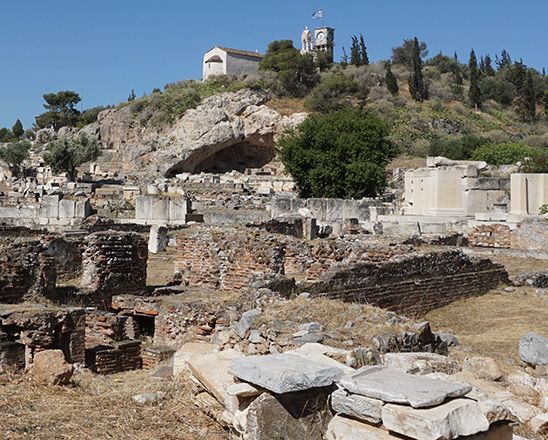
What do you give a god? Religion you can touch in Ancient Greece

What did ancient Greeks actually do when they interacted with their gods? What did they bring, leave behind, wear, burn, break, or dedicate—and why? This course explores ancient Greek religion through its material remains, treating religion as a system of beliefs and practices visible (and tangible) through ancient objects, bodies, and spaces.
Focusing on archaeological evidence, we will examine temples and shrines, altars and offerings, cult statues, ritual vessels, figurines, and the traces left by sacrifice, pilgrimage, healing, and prayer. Special attention is given to gifts to the gods—votive offerings of all kinds—and to what these objects reveal about hope, fear, gratitude, obligation, and negotiation in the ancient world. Through case studies from sanctuaries across Greece, students will learn how archaeologists reconstruct ancient Greek religion from material evidence.
The course emphasises hands-on ways of thinking about religion: how objects mediated relationships between humans and gods, how sacred spaces were created and experienced, and how everyday people participated in religious life. By the end of the course, students will be able to analyse religious material culture and understand ancient Greek religion as something people made, handled, and performed—a religion you could literally touch!